

In the world of precision manufacturing and mechanical assembly, one of the most common yet critical questions engineers and machinists face is: what is the minimum depth for a tap hole? Getting this calculation wrong can lead to stripped threads, broken fasteners, or worse—a snapped tap buried deep inside an expensive workpiece. This guide explores the technical requirements for tap depth, the relationship between drill depth and thread engagement, and how premium tooling from MisolGroup can optimize your threading operations.
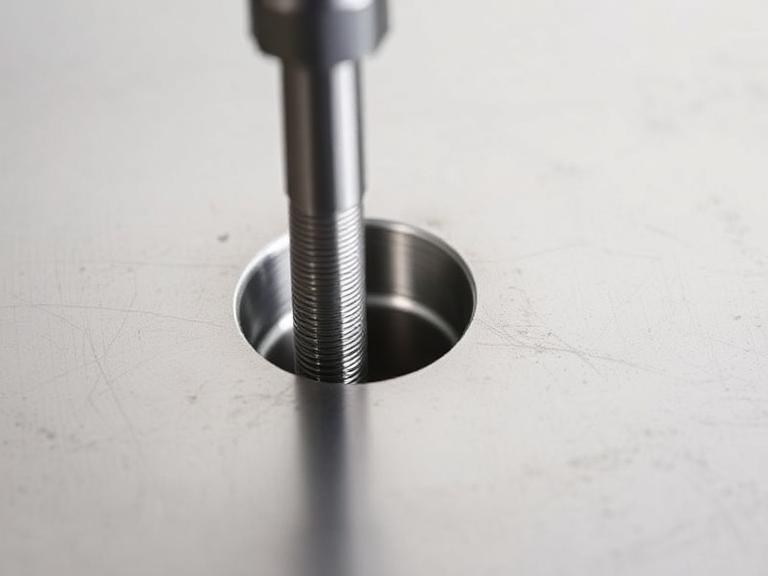
Table of Contents
- 1. Understanding the Difference: Drill Depth vs. Thread Depth
- 2. Calculating the Minimum Depth for a Tap Hole
- 3. Material Impact on Thread Engagement
- 4. MisolGroup: High-Performance Threading Solutions
- 5. Best Practices for Blind Hole Tapping
- 6. Summary Table: Tap Depth Guidelines
- 7. Frequently Asked Questions (FAQs)
- 8. References
Understanding the Difference: Drill Depth vs. Thread Depth
When discussing the minimum depth for a tap hole, it is vital to distinguish between the tap drill depth and the full thread depth. In a blind hole—a hole that does not break through to the other side—you cannot have full threads all the way to the very bottom. This is due to the “chamfer” or the tapered lead on the end of the tap.
The tap drill must always go deeper than the required screw engagement. If your design requires 10mm of usable thread, the hole must be drilled significantly deeper to accommodate the chips (swarf) and the non-cutting portion of the tap. Failing to provide this clearance is a leading cause of tool failure.
Calculating the Minimum Depth for a Tap Hole
A standard engineering rule of thumb for the minimum depth for a tap hole in a blind hole application follows a simple formula. To determine the total depth you should drill, consider the following components:
- Desired Thread Engagement: The length of the bolt that will actually be screwed into the part.
- The Tap Chamfer: Depending on the tap style (Taper, Plug, or Bottoming), this can be anywhere from 1.5 to 9 thread pitches.
- Clearance/Chip Space: Usually 2 to 3 additional thread pitches to ensure the tap does not bottom out on the chips it produces.
Mathematically, the minimum depth for a tap hole (drilling depth) can be expressed as:
$$Total\ Drill\ Depth = Required\ Thread\ Depth + (Chamfer\ Length \times Pitch) + (3 \times Pitch)$$
For example, if you are tapping an M6 x 1.0 thread and need 12mm of usable thread using a standard plug tap (typically a 5-thread chamfer), your drill depth should be at least $12 + (5 \times 1) + (3 \times 1) = 20mm$.
Material Impact on Thread Engagement
The minimum depth for a tap hole is also dictated by the material of the workpiece. Harder materials like stainless steel require less engagement to reach the tensile strength of the bolt, whereas softer materials like aluminum require deeper holes to prevent stripping.
Hard Materials (Steel, Cast Iron)
For carbon steel and cast iron, a thread engagement of 1 to 1.5 times the diameter of the screw is typically sufficient. In these cases, the minimum depth for a tap hole is relatively shallow because the material is strong enough to resist the shear forces applied by the bolt.
Soft Materials (Aluminum, Brass, Plastic)
In non-ferrous alloys or plastics, the minimum depth for a tap hole should be increased to 2 to 2.5 times the diameter. Because these materials are less dense, more surface area (more threads) is needed to distribute the load effectively. MisolGroup offers specialized JIS spiral groove tap series designed specifically to evacuate long, stringy chips from these softer materials, ensuring the depth is achieved without clogging.
MisolGroup: High-Performance Threading Solutions

Since our founding in 2005, MisolGroup has established itself as a leading Chinese manufacturer of high-performance thread cutting tools, integrating R&D, production, and global sales into a seamless operation.
Advanced Manufacturing & Uncompromising Quality
Our commitment to excellence is embedded in our manufacturing process:
- Full In-House Production: We control the entire process with advanced CNC automation, vacuum heat treatment, and comprehensive testing facilities.
- Premium Materials: We use high-grade high-speed steels (HSS) like M35, DV3, and M2 to produce durable premium taps that ensure superior performance and longer tool life.
- R&D Expertise: Our strong R&D team, backed by nearly two decades of experience, focuses on innovating thread tool applications for the most demanding materials.
Engineered for Demanding Industries & Materials
Our threading tools are optimized to excel across a wide range of applications in Automotive, Aerospace, Defense, Electronics, and Mold & Die Manufacturing. We specialize in effectively machining cast iron, carbon steel, stainless steel, and non-ferrous alloys.
Featured Products:
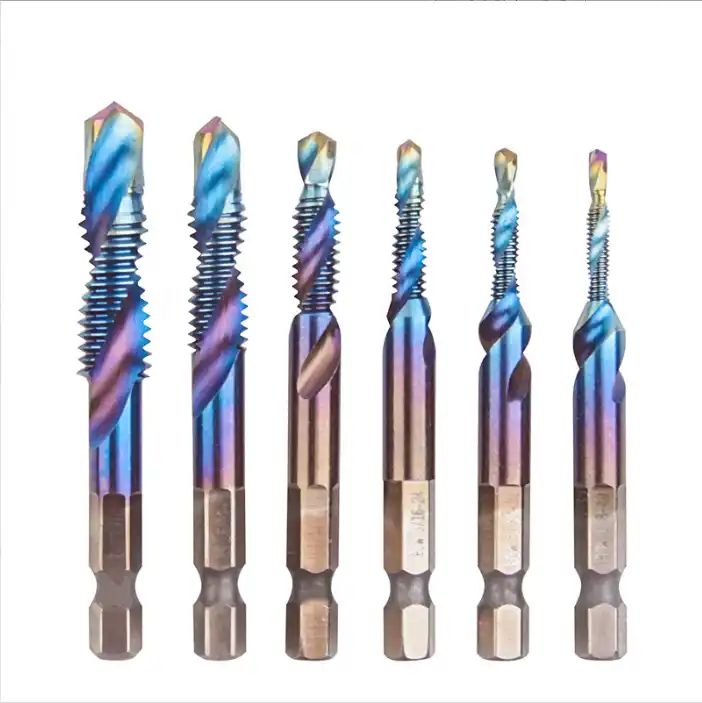
screw tap
Best Practices for Blind Hole Tapping
When working with the minimum depth for a tap hole, following these best practices will save time and reduce scrap rates:
1. Choose the Right Tap Style
For blind holes, always use a spiral flute tap (like the MisolGroup JIS series). The spiral flutes act like a drill bit to pull chips up and out of the hole. If you use a straight flute tap, chips will pack at the bottom, making it impossible to reach your minimum depth for a tap hole without breaking the tool.
2. Use High-Quality Lubrication
Tapping generates significant heat and friction. A high-sulfur cutting oil or a specialized tapping fluid reduces torque requirements and helps the tap reach the bottom of the hole smoothly. This is especially important when using DIN371 taps in stainless steel.
3. Use Bottoming Taps for Shallow Holes
If your design has very little space and you must maximize thread engagement, use a bottoming tap. These have a very short chamfer (1.5 to 2 threads), allowing you to get full threads much closer to the bottom of the drilled hole.
Summary Table: Tap Depth Guidelines
This table provides a quick reference for the minimum depth for a tap hole based on common screw diameters and material types.
| Thread Size | Material Type | Min Thread Engagement | Recommended Drill Depth |
|---|---|---|---|
| M5 x 0.8 | Steel | 5mm – 7.5mm | 10mm – 12mm |
| M5 x 0.8 | Aluminum | 10mm – 12.5mm | 15mm – 18mm |
| M10 x 1.5 | Steel | 10mm – 15mm | 18mm – 22mm |
| M10 x 1.5 | Cast Iron | 15mm – 20mm | 25mm – 30mm |
| 1/4-20 UNC | Stainless Steel | 0.375″ – 0.5″ | 0.6″ – 0.75″ |
Frequently Asked Questions (FAQs)
Can the minimum depth for a tap hole be less than 1x diameter?
Technically, yes, but it is not recommended for structural applications. Most fasteners require at least 3 to 5 full threads of engagement to prevent stripping. If the depth is less than 1x the diameter, you risk the fastener pulling out under load.
What happens if I don’t drill deep enough?
If you don’t provide enough clearance for the tap chamfer and chips, the tap will “bottom out.” This causes the torque to spike instantly, often resulting in a broken tap. It also prevents the screw from seating fully, which can compromise the entire assembly.
Why does MisolGroup use M35 and DV3 steel?
These premium high-speed steels contain cobalt (M35) or high vanadium (DV3), which provide superior red-hardness and wear resistance. When you are pushing for the minimum depth for a tap hole in hard materials like stainless steel, these materials ensure the tap stays sharp and doesn’t gall or snap.
What is the difference between DIN371 and ISO standards?
DIN371 is a German industrial standard that specifies a reinforced shank for smaller tap sizes (up to M10). This makes the tool much more rigid, which is beneficial when tapping deep holes where deflection could cause a 2B or 6H thread to be out of tolerance.