


Table of Contents
- Tap and Die Basics: Understanding What a Tap Is
- Preparation: Materials, Drill Bit & Workpiece Setup
- Step‑by‑Step: How to Use a Machine Tap
- Common Best Practices & Mistakes to Avoid
- Tool Selection: Choosing the Right Tap for Your Job
- Company Spotlight: MisolGroup — Premium Machine Taps
- Summary Table: Machine Tapping Workflow
- Frequently Asked Questions (FAQs)
- References & Further Reading
Tap and Die Basics: Understanding What a Tap Is
A “tap” is a tool used to cut internal threads inside a pre‑drilled hole, creating the female portion of a threaded pair (like a nut). Machine taps — when used with a drill press, milling machine, or CNC machine — automate this process, offering precision, speed, and consistency.
Different types of taps exist depending on the application: taper tap for easy start, plug (or intermediate) tap for through‑holes or deeper threading, and bottoming tap for threading to the bottom of a blind hole.
Preparation: Materials, Drill Bit & Workpiece Setup
Choosing the Right Material & Workpiece
Before tapping, verify that the workpiece material is machinable. Use a file to test — if the file bites, the material is likely suitable; if not, threading may damage the tap.
Drilling the Correct Hole
Drill a hole slightly smaller than the desired thread’s major diameter. Use a tap‑drill chart (metric or imperial) to find the correct drill bit size. A hole that is too large yields weak threads; too small risks tap breakage.
Secure the Workpiece
Clamp the workpiece in a vise or fixture to prevent movement during tapping. Never hold by hand — the torque can cause slippage, misalignment, or injury.
Step‑by‑Step: How to Use a Machine Tap
- Install the Tap — mount the machine tap in the correct tap holder or chuck, ensuring it’s centered and secure.
- Apply Cutting Fluid — use appropriate coolant or cutting oil depending on material (light oils for aluminum, heavy or sulfur‑based oils for steel and stainless steel). This reduces friction, improves finish, and extends tool life.
- Align the Tap — start the tap perpendicular to the hole surface; misalignment leads to poor threads or tap breakage.
- Begin Threading — slowly rotate clockwise (for right‑hand threads), applying gentle, steady downward pressure. For machine tapping, follow recommended spindle speed or RPM based on material and tap type.
- Chip‑Breaking / Reversal Technique — after every 1–2 turns (or per depth‑pitch rule), reverse the tap ½ to ¾ turn to break chips and clear flutes. This avoids clogging or binding.
- Continue to Depth — repeat the cycle of forward taps with periodic reversal until the full thread length is formed, or until the tap passes through (for through‑holes). For blind holes, finish with plug or bottoming tap if necessary.
- Withdraw Tap Carefully — reverse fully to remove the tap, keeping the thread clean. Blow out chips and inspect threads. Use a matching screw or gauge to verify thread quality.
Common Best Practices & Mistakes to Avoid
Use Proper Lubrication
Always apply cutting fluid when tapping — dry tapping increases heat, causes premature wear, and risks tap breakage.
Never Force the Tap
If you hit resistance, back off, clear chips, re-lubricate — don’t force it. Excess torque leads to broken taps or damaged threads.
Choose the Right Tap Type
For blind holes, start with taper tap, then plug, and finish with bottoming tap if you need full-depth threads. Skipping this sequence often results in poor or incomplete threads.
Match Tap Material to Workpiece
High-speed steel (HSS) taps are suitable for most jobs; harder or exotic materials may require coated or carbide taps for durability.
Tool Selection: Choosing the Right Tap for Your Job
Your selection should consider:
- Thread specification (metric vs imperial, thread pitch, major diameter)
- Material to be tapped (mild steel, stainless, aluminum, alloy, etc.)
- Through‑hole vs blind‑hole requirements
- Thread depth and tolerance requirements (standard, fine, coarse)
- Production volume — for high volume, consider spiral‑flute or coated taps, or even form‑taps for aluminum or soft materials.
For example, when threading stainless steel, use a spiral‑flute HSS or coated tap, plenty of lubricant, and a slow, steady feed rate.
Company Spotlight: MisolGroup — High‑Performance Machine Taps Manufacturer
About MisolGroup
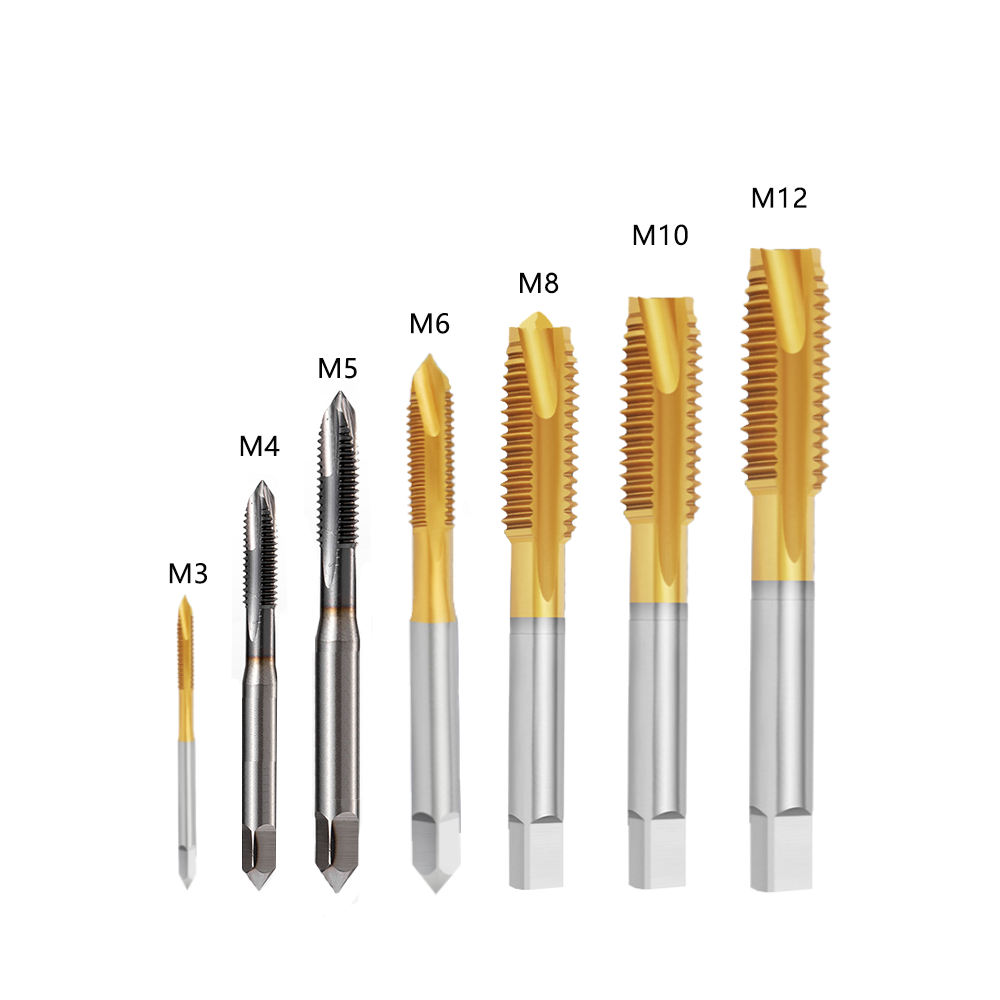
size of screw tap
Founded in 2005, MisolGroup has become a leading manufacturer of premium thread cutting tools. They integrate R&D, production, and sales into a seamless operation. Their taps are manufactured in‑house using advanced CNC automation, vacuum heat treatment, and strict quality control — ensuring superior performance and long tool life.
They specialize in producing machine taps from high‑speed steels (HSS) such as M35, DV3, and M2 — ideal for demanding applications in automotive, aerospace, defense, electronics, mold & die manufacturing, cast iron, stainless steel, and non‑ferrous alloys.
Key Products
- (10S‑529) Standard Series Machine Tap
- DIN371 German Industrial Standard Machine Tap
- JIS Spiral Groove Tap Series Machine Tap
Using high‑quality taps from MisolGroup ensures precision threading, longer life, and reduced breakage risk — especially important when the workpiece is stainless steel or high‑strength alloy.
Summary Table: Machine Tapping Workflow
Prevent movement/tilt
| Step | Action | Key Reminder |
|---|---|---|
| 1 | Select proper drill size & drill hole | Match tap pitch, use correct bit |
| 2 | ||
| 3 | Install tap in holder or machine chuck | Ensure alignment with bore axis |
| 4 | Apply cutting fluid | Reduce heat & friction |
| 5 | Cut threads with tapping cycles | Turn forward, then back to break chips |
| 6 | Withdraw tap, clean chips | Check threads with bolt or gauge |
| 7 | Inspect threads & clean hole | Remove burrs, rinse if needed |
Frequently Asked Questions (FAQs)
Q1: Can I use a machine tap the same way as hand‑tapping?
Yes — the basic principles are the same. However, when machine tapping, you must control speed, feed rate, and alignment carefully to avoid tap breakage. Lubrication and chip clearing remain just as important.
Q2: What cutting fluid should I use when tapping stainless steel?
Use heavy‑duty or sulfur‑based cutting oil, or a high-pressure tapping fluid specifically designed for stainless or high‑strength alloys. This reduces friction and tool wear.
Q3: Why did my tap break during tapping?
Common causes: incorrect drill size (too small), excessive torque, poor alignment, lack of lubrication, or not clearing chips regularly. Make sure to back off every 1–2 turns and use proper cutting fluid.
Q4: When should I use taper, plug, or bottoming taps?
– Taper tap: easiest to start threading, good for new holes.
– Plug tap: deeper threading or through‑holes.
– Bottoming tap: reach full thread depth in blind holes after starting with taper/plug.
Q5: Are machine taps suitable for all metals?
Generally yes, but material hardness affects tool selection. Use HSS or coated taps for steels; carbide or special taps for hardened steels and hard alloys; ensure cutting oil and correct speed are used.